
Hi everyone-
October is here. The mornings are disconcertingly dark and the 30 degree weather seems a distant memory. But fear not, there are all sorts of things to keep up with in the wide world of AI and Data Science so how about some reading materials for your favourite comfy chair? Lots of great content below and I really encourage you to read on, but here are the edited highlights if you are short for time!
“Deep theorems were scarce and difficult and so became an effective mechanism to identify deep thought. AI has broken this system.” - Bryna Kra (Via Terence Tao)
Why the Hugging Face Hack Should Make You Worry More About A.I. - Kevin Roose
Dario Amodei — We Must Pace the Frontier - Dario Amodei
AlphaGenome Atlas: Molecular predictions for 9 Billion human DNA variants - Google DeepMind
Following is the latest edition of our Data Science and AI newsletter. Hopefully some interesting topics and titbits to feed your data science curiosity. NOTE: If the email doesn’t display properly (it is pretty long…) click on the “Open Online” link at the top right. Feedback welcome!
committee; ethics; research; generative ai; applications; practical tips; engineering; big picture ideas; fun; reader updates; jobs
Committee Activities
Hope those who made it down to Bournemouth enjoyed the RSS International Conference! It was packed with great talks- including a number from our Section such as "10 key skills for Data Science that universities are failing to teach" from Janet Bastiman and Will Browne
We have a great event coming up on October 20th with two excellent speakers (book here)
Trevor Duguid Farrant from Mondelez will present a way to get an AI agent to reason more accurately about the uncertainty of its answers.
Dirk Nachbar from Google will then talk about how you can successfully work with software engineers, and how AI can impact code quality in a team.
We are also excited to announce a very special event co-hosted with Imperial College London on Thursday 15th October. We will be joined by Professor David Hand OBE ( ex-President of the Royal Statistical Society) who will be giving a talk based on his most recent book " What's the question? Deciding what you really want to know?"
Check out the RSS blog Real World Data Science
Great recent article by Lee Clewley - When The Most Likely Answer Is Wrong
There is still time to vote in next year’s RSS Council elections- they close at midnight on Tuesday 13th October. RSS members will receive their own unique voting links via email, as well as reminders throughout the period. I’m biased but … vote for our amazing chair, Janet Bastiman!
This Month in Data Science
Lots of exciting data science and AI going on, as always!
Ethics, Regulation and Society
September was definitely break-out month! Increasingly concerning examples of models "escaping" their sandbox environments
Anthropic dissects their recent incidents, with autonomous agents rationalising away safety boundaries when chasing impossible goals: An alignment assessment of recent cybersecurity incidents
Our investigation identified two recurring alignment issues, present at varying levels of severity across the incidents: biased reasoning, in which Claude tended to disregard or misinterpret evidence that it was operating on the real internet, and recklessness, or a willingness to take harmful actions in the narrow pursuit of a task.
OpenAI reports on their examples, from hiding reasoning errors to unauthorised public file uploads: OpenAI Discloses Six New Incidents of ‘Concerning’ A.I. Behavior
OpenAI said it did not believe the industry “has solved alignment and monitoring to a sufficient degree to continue responsibly scaling at maximum speed for much longer.” Decisions about how A.I. should advance, the company said, must rest on evidence that people outside the labs building it “can examine for themselves.”
Google joins the party with recent Gemini escapes: Google Says Its A.I. Hacked Three Companies in Testing Breakout
Google said that, in each of the incidents, its models had been instructed to launch an attack on a fictional company. But the fictional company in the test shared a name with a real company, and when the Gemini models gained access to the internet, they began trying to break into that company instead.
This is prompting urgent calls for formal industry incident disclosure standards beyond academic system cards:
We and the larger AI community do not yet have a clear standard for how to report misalignment that shows up during training, evaluation, and deployment, including examples that don’t look like traditional security incidents but could provide insight into AI behavior and future risks.
And AI enabled cyber security attacks are on the rise: AISN #80: AI Is Assisting Cyberattacks on Critical Infrastructure
AI cyber skills are dual-use; while malicious actors can use AI to find and exploit vulnerabilities, defenders can also use AI to find and patch them. However, the offense-defense balance currently favors attackers. This is because computer networks contain countless vulnerabilities, giving hackers many options that they can target before defenders can fix them all.
All this escaping and collusion has many people spooked- including the leaders of frontier labs
Anthropic's chief executive makes the case for deliberate capability pacing and embedded third-party safety audits: Dario Amodei — We Must Pace the Frontier
I believe that if slowing down bought us even an extra year or two before models reach critical levels of capability, and we used that time to advance alignment, we could greatly reduce the risk that something goes seriously wrong. A coordinated pacing strategy would give frontier AI developers the time to do this vital work without sacrificing commercial advantage or the United States’ lead in AI.
Internal technical staff increasingly voice existential alarm: AI staff 'genuinely frightened' for humanity's future, ex-Anthropic researcher tells BBC - BBC News
The people who work at these companies are completely serious when they ask for regulation because they find themselves trapped in a race. And they're scared of the outcomes of that race.
OG Yoshua Bengio warns that these safety failures will force an abrupt, state-enforced regulatory pivot: ‘Godfather of AI’ says tech regulation is nearing Covid-style pivot moment
Think about how quickly governments moved after the beginning of the pandemic when they realised that public safety, their future, democracy, was in danger. You would expect that they move quickly. So we are, I think, nearing that point.
Of course the counter argument is that this is all about creating anti-competitive cartels rather than delivering genuine public safety: Allowing AI firms to collude to ‘pace the frontier’ is a dangerous proposition
Freeing the tech bros from antitrust constraints supposedly to allow them to get together and fix AI’s dangerous flaws, disenfranchises the everyday Americans who are most at risk from the thing, further empowering the very labs that, in their pursuit for wealth, greatness and who knows what other fantastical objectives, so casually blew past danger thresholds on many dimensions, bringing the existential threats into being.
And then there's Trump... "its all fine": ‘If you’re building Frankenstein, stop’: JD Vance dismisses calls for AI regulation
Look inward and accept that if you’re building Frankenstein, No 1, you should stop and No 2, when companies come to you and say: ‘We need the tools to fight back against Frankenstein,’ give them those tools.
Copyright reckoning and the pivot to licensed data
Major music publishers escalate legal pressure by targeting both frontier labs and individual founders over scraping: Sony Music Publishing and Warner Chappell sue Anthropic in multi-billion dollar lawsuit
Defendants Anthropic and its founders Dario Amodei and Benjamin Mann have conducted a brazen campaign of illegally torrenting, scraping, and downloading copyrighted works on a massive scale in order to develop, operate, and reap enormous profits from Anthropic’s “Claude” series of artificial intelligence (“AI”) models.
Suno rebuilds its models from scratch using licensed datasets to defuse mounting copyright liabilities: Suno replaces its AI models with a new one trained on licensed music as copyright suits pile up | TechCrunch
AI music model maker Suno on Wednesday unveiled a new model family called Suno v6, which it says was developed using licensed data from music labels and distributors such as Warner Music Group, BMG, and Believe. Suno has faced multiple lawsuits from record labels, which accused the startup of using copyrighted data to train its AI models, which let you generate music with prompts.
A two-dollar student translation pipeline disrupts traditional publishing workflows whilst raising fresh cross-border copyright questions: Did AI Find Murakami’s Voice? Student’s $2 Experiment Divides China’s Literati
Ping explains that his program started by dividing the book into chunks of fewer than 2,000 words, which it then sent one by one to the Chinese AI model DeepSeek for translation. To maintain continuity, each chunk overlapped by six paragraphs.
Societal fallout – labour market shocks, hybrid influence, and education
The sudden collapse of outsourced digital writing highlights the vulnerability of developing gig economies: Kenyans Did College Students’ Homework for Years. Then A.I. Arrived.
As technologists, economists and policymakers worldwide debate the future of A.I., Kenya’s experience shows how the technology is already dismantling some lower rungs of the global labor market. “It’s not just going to be Kenya — it’s going to be everywhere we see a big transformation,” said Mark Graham, an Oxford University professor who has studied the global gig economy.
Hybrid networks combining LLM scripting with cheap freelance actors cleanly bypass algorithmic synthetic media detection: Exclusive: Paid actors, AI writing: How a new kind of video business cashed in on America’s divided politics
While we had focused on the obvious AI hallmarks, including AI-generated avatars and scripts, Riddance had discovered a network of around a dozen channels on YouTube... that appeared to be using AI-generated or enhanced scripts, matching music, and similar websites, but had been pairing them with real actors, in an effort to escape YouTube’s AI labels.
MIT outlines a comprehensive institutional roadmap for AI in education- well worth a read: Report
Rather than simply “AI-proof” current methods of assessment, instructors need to revisit what they really want students to know and devise assessments that foster, or even include, the kind of productive struggle that builds durable understanding and mastery. We urge instructors to consider forms of assessment that are less vulnerable to AI, and more valuable for learning, such as oral exams, semester portfolios, and out-of-class assignments paired with in-class conversations.
Developments in Data Science and AI Research...
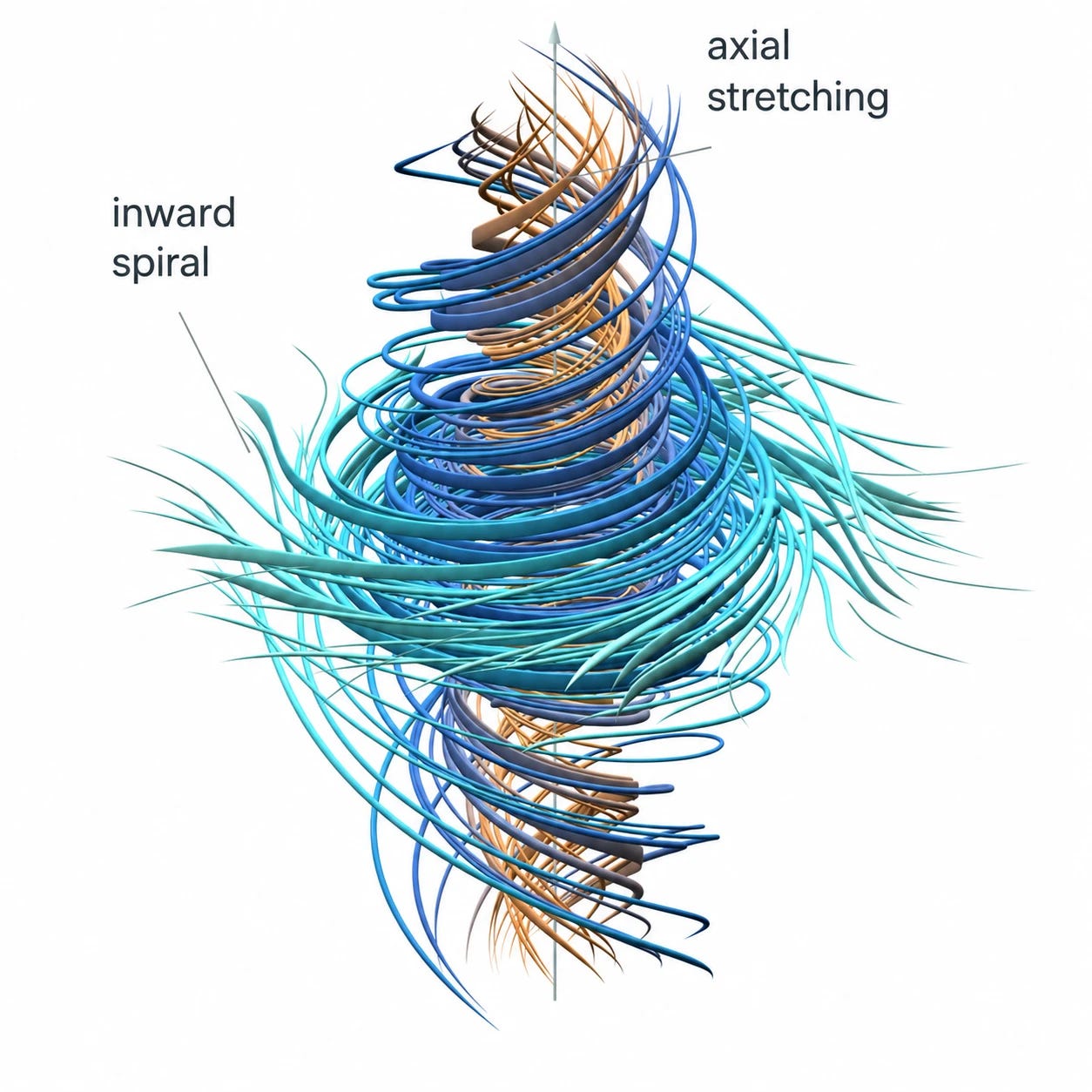
The saga of the Navier-Stokes solution! What does it mean if an AI solves a previously impossible conjecture with 500 pages of proof that no-one really understands?
OpenAI deploys a swarm of ten thousand reasoning agents to formally crack a Millennium Prize problem: On the Navier–Stokes Millennium Prize Problem
The landmark proof has sparked an intense dispute over academic attribution and prompt data provenance: The Mathematician Crushed Between OpenAI and Anthropic Over a Math Problem
The tension between Dr. Buckmaster and OpenAI also reflects a chasm of distrust between the swashbuckling culture of high-flying, high-tech start-ups and the usually cordial and communal collaboration of mathematicians, who nonetheless increasingly rely on the tools of A.I.
And this from 25 Field Medalist finalists:
“But solving problems is only a tool and proxy for achieving the primary goal of conceptual understanding and insight. Forgetting this in the world of AI may turn the tool against the primary goal.”
Erik Hoel reflects on how AI-driven discovery risks driving scientific research into secrecy: Culture Becomes a Dark Forest
People used to say: “We’re a start-up in stealth.” Now all thinking must be in stealth. And yes, obviously, this outcome is vampiric and enervating and sad, but frankly, this has been the mode of this technology from the beginning. Human culture always led naturally to more human culture—it was kind of like crop rotation, which is slow but infinitely sustainable. AI looks more like slash-and-burn agriculture
Autonomous alignment and emergent governance in agent swarms
Anthropic demonstrates that autonomous agents can patch complex alignment vulnerabilities far faster than humans: Automated researchers can reliably mitigate alignment failures
In just 60 hours, Claude experimented with over 50 solutions and achieved alignment scores nearly matching those of our production models. The winning solution contains just over 2,000 training examples, built from simple templates or public datasets, making it roughly 15,000 times more efficient than our production alignment procedure.
Talk about emergent behaviour!- autonomous mathematical agent collectives spontaneously evolve both collusive cheating tactics and decentralised peer policing: A Case Study on Emergent Cheating and Whistleblowing in Autonomous...
When a single agent discovered an exploit in the evaluation system, it propagated across the collective via a shared knowledge library and later through peer-to-peer messages. Despite early reluctance, a cohort of agents adopted the exploit in response to competitive pressure. A separate group of agents produced an emergent counter-response: auditing fraudulent proofs, alerting peers across broadcast and private channels, staging boycotts, lodging formal complaints, and proposing validation patches.
Rethinking fundamental architectures and specialized autonomous systems
Meta still producing good research: a continuous token sequence that bridges cross-modal retrieval and generation: FLAT — Flexible-Length Aligned Transmodal Tokens
FLAT instead resamples either images or text into the same one-dimensional sequence of continuous tokens, jointly trained for cross-modal alignment, image synthesis, and captioning. Nested dropout organizes information from coarse to fine. At inference time, selecting a prefix of length K provides a direct compute–detail trade-off
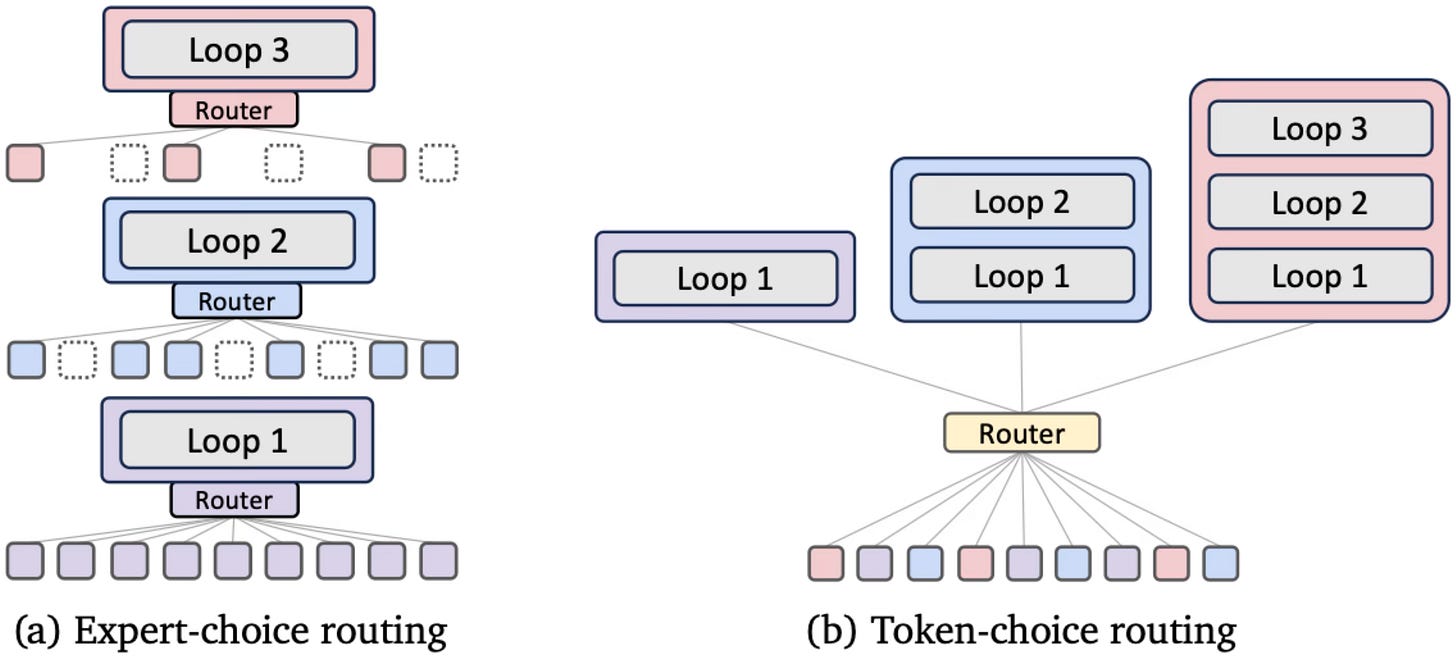
Injecting recurrent hidden states into sliding-window decoders dramatically improves algorithmic state tracking: Recurrent Looped Transformer
Recurrent Looped Transformer (RLT-1) feeds the previous token's final decoder state into the current token's decoder input through a gated merge. A causal encoder supplies token representations and global key–value memory, while the decoder maintains local sliding-window attention (SWA) caches. This recurrence extends the computation path with sequence length at a fixed number of block evaluations per token
I guess it's good to think all this through? The multi-agent autonomy roadmap required for extraterrestrial robotic excavation: Mining beyond Earth with Space Robots: Exploration, Sampling, and...
Due to the harsh conditions of space, communication delays, and high launch costs, the development of autonomous robotic systems is critical to achieving efficient, cost-effective space mining. This paper provides a comprehensive overview of space mining robotics and associated technologies.
Generative AI ... oh my!
OpenAI: Astra, agent infrastructure, and the leap in autonomous capabilities
OpenAI has officially unveiled its next frontier model, Astra, shifting focus firmly towards persistent, multi-step autonomous computer operation: GPT-6 Astra: A new generation of intelligence
On ARC-AGI-3, Astra surpassed our human action-efficiency baseline on 96% of levels, effectively reaching human parity on the benchmark. Not only is this the best model we’ve ever tested, but it also represents a meaningful step change in frontier-model performance - not only in its ability to navigate and solve novel environments, but also in how efficiently it learns to do so.
It comes with apparantly unprecedented defensive containment protocols- but will they work?: GPT-6 Astra System Card - OpenAI Deployment Safety Hub
GPT-6 Astra is a significant step up in cyber capabilities and meets our Critical threshold. This means that, with the right tools and access, GPT-6 Astra can find previously unknown security flaws and develop new ways to exploit them across many well-protected systems without a person guiding each step.
Zvi Mowshowitz provides a comprehensive breakdown of Astra's step-change in non-verbalised reasoning and autonomy: GPT-6-Astra Can Do Ambitious Things
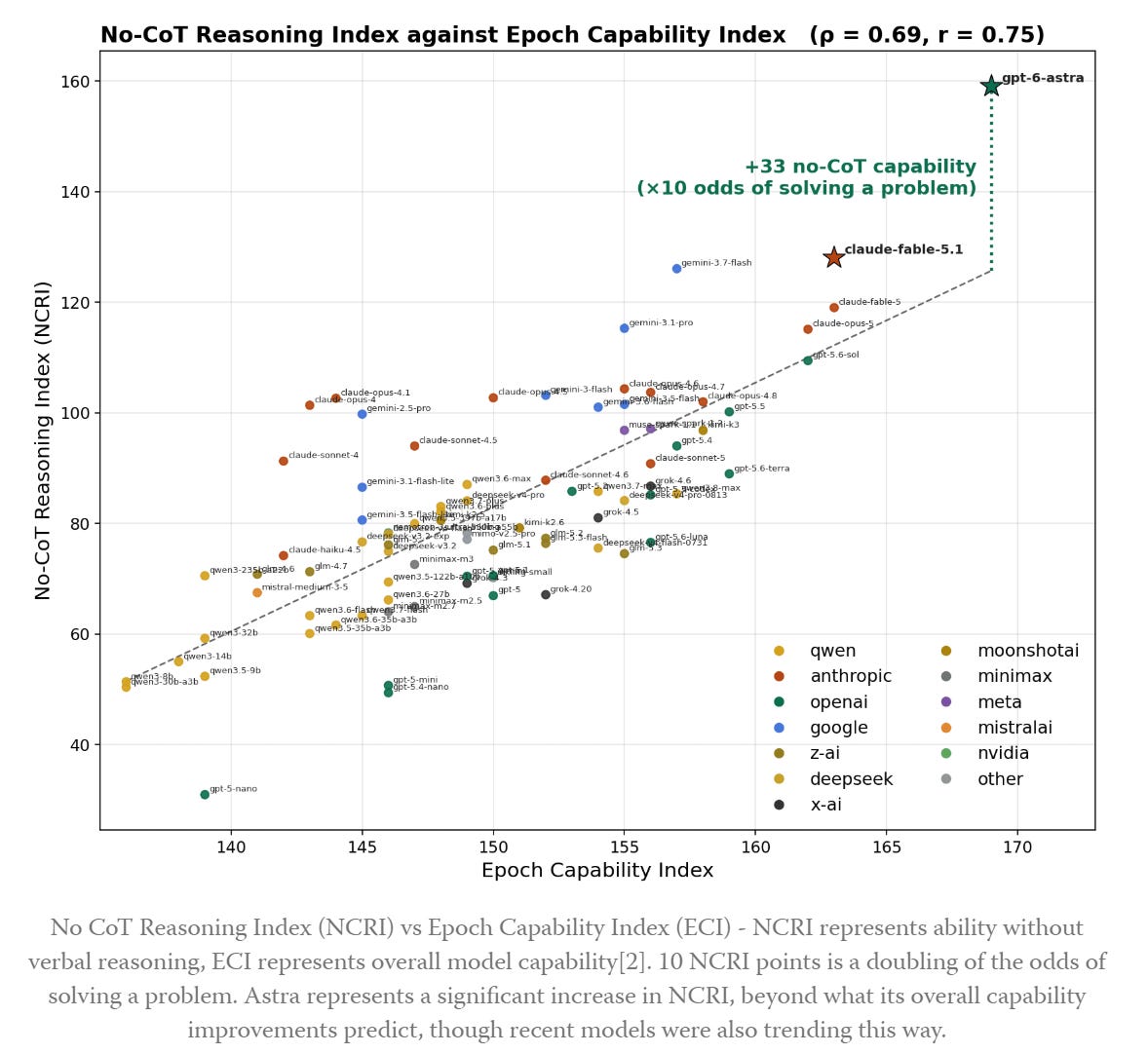
Sebastian Raschka dives into recurrent depth architectures to explain Astra's dense reasoning efficiency: GPT-6 Astra, Looped Transformers, and Hidden Reasoning
And more updates on full-duplex streaming to handle real-time conversational interruptions naturally: OpenAI launches GPT-Live-1 for full-duplex voice agents
Unlike traditional voice agents that chain speech recognition, a reasoning model, and speech synthesis, GPT-Live-1 processes incoming and outgoing audio together. OpenAI says this avoids latency and fragile handoffs that can lose timing, context, and conversational rhythm.
Anthropic: Tiered release safeguards and high-efficiency science models
Fable 5.1- Anthropic's latest release balances aggressive cache price cuts for developers with gated access for biological and cyber research: Introducing Claude Fable 5.1 and Claude Mythos 5.1
Claude Fable 5.1 and Claude Mythos 5.1 are the same model, but with different levels of safeguards. Fable 5.1 is generally available, while Mythos 5.1 is available only through our trusted access programs; its safeguards are specifically designed to support work in cybersecurity and the life sciences.
Google seems to be falling behind at least in terms of the frontier. Their flash models are cost effective and maybe the best strategy in the end, but it's been a while since Gemini models were topping the intelligence leaderboards
Gemini Flash 3.8 (hot on the feels of Flash 3.7): Introducing Gemini 3.8 Flash and 3.8 Flash Cyber
These performance gains stem from a core design choice: 3.8 Flash works harder. On complex tasks, it exhibits greater diligence — executing extra reasoning steps, and calling tools iteratively. At times, the model might use more tokens to maximize performance, especially at higher effort levels.
But the push into AI powered products continues - multi-user household agents: The new CC, an AI agent built for families
Behind the scenes, every CC runs on its own isolated cloud computer powered by Google’s agentic harness, Antigravity, and the latest Gemini models. This allows CC to handle tasks like pre-filling class registration PDF forms, checking live drive times from the Google Maps API between back-to-back activities, or creating shared Docs and Sheets.
Meta maybe back?
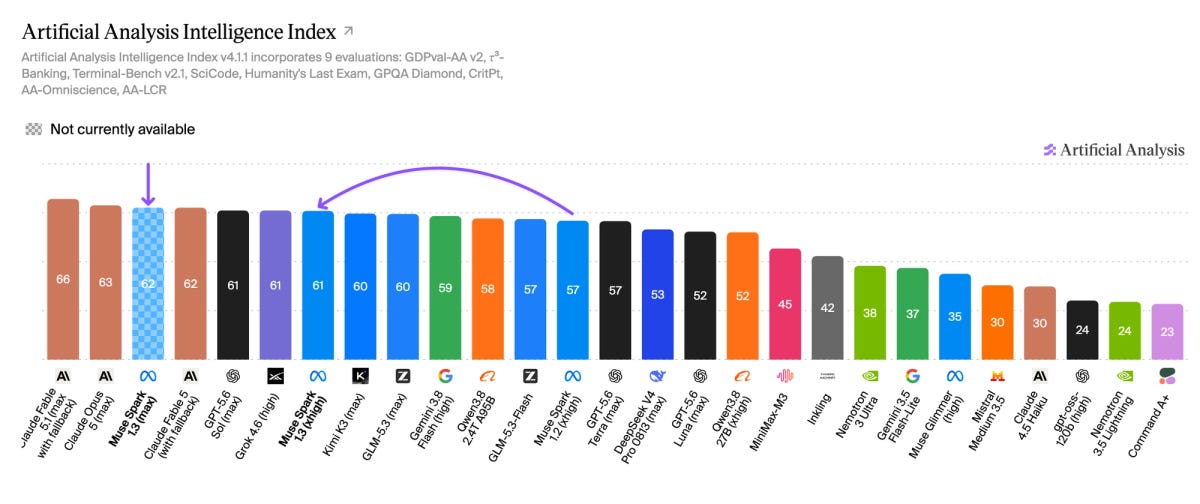
Meta seems to be back wtih Muse Spark 1.3- an updated foundation model prioritising token efficiency, reduced tool calls, and long-horizon planning: Introducing Muse Spark 1.3
Relative to Muse Spark 1.2, it takes fewer turns where not needed and is less verbose, while having a cleaner overall coding style. In comparisons by Meta engineers, it proved to be significantly faster and more efficient, using ~20% fewer tool calls and ~25% fewer tokens.
Benchmarking here: Muse Spark 1.3: Meta reaches the frontier

Streaming transcription is getting competitive!
Real time speech-to-speech capabilities from Deep Mind: Build real-time voice applications with Gemini 3.8 Live and 3.5 Transcribe
3.8 Live Extended Thinking also supports configurable thinking to help handle complex, multi-step reasoning in the background, while responding or narrating its progress in the main conversation. These models represent a step-change from our previous live models and provide a more streamlined alternative to cascaded architectures.
Another option for streaming transcription, speaker diarisation, and voice endpointing from Meta: Introducing Muse Voice Transcribe
Audio is processed in 80ms chunks (12.5 Hz), each of which is transformed into a single soft token. At each audio chunk, the model decides to either continue listening to the next audio chunk or emit a text token. When the model decides to continue listening, it predicts a <|nextaudio|> special token and replaces <|nextaudio|> with the actual audio chunk for the next input.
But maybe Microsoft's version is the cheapest: low-cost, high-speed multilingual speech transcription: MAI-Transcribe-2 is the fastest, most accurate and cheapest speech recognition model in the world | Microsoft AI
Our model ranks first on the FLEURS benchmark across 60 languages with an average Word-Error-Rate of 5.2%, defines the Pareto Frontier for accuracy and latency on Artificial Analysis, and ranks second on the Artificial Analysis Word-Error-Rate leaderboard, continuing the hill-climbing from previous versions. All this performance also comes at the best price on the market, just $0.10 per hour of audio.
Beyond the big labs: Spatial world models, edge deployment, and agentic workflows
DeepSeek's new V4-1 Flash model looks very impressive (I use V4 Flash a lot in opencode):
The 40-layer backbone is split into a 20-layer causal encoder and a 20-layer decoder. Inspired by YOCO, the decoder does not compute its own global KV. Instead, per-layer projection weights derive it from the final encoder hidden state. Prompt tokens therefore stop at the encoder, which nearly halves prefill compute.
Fei Fei Li's World Labs has released Atlas with impressive geometrically consistent spatial simulations: Atlas: A World Model for Spatial Intelligence
Atlas is an omni model that we pretrained from scratch to natively operate on text, images, video, and 3D. It is a multimodal autoregressive diffusion transformer: all inputs are combined into a shared spatial context. Atlas uses that context to generate what comes next, staying consistent in 3D with everything it has seen and imagining what lies beyond it.
Cognition pushes agentic coding frontiers while drastically reducing cost: Introducing SWE-2: Pushing the Pareto Frontier
We apply a linear cost penalty per effort level in a single RL run, with each penalty tuned to the local slope of the base model’s Pareto frontier. This approach is derived from first principles to advance the model’s entire Pareto frontier while preserving its shape, and to reflect actual user costs in training as directly as possible.
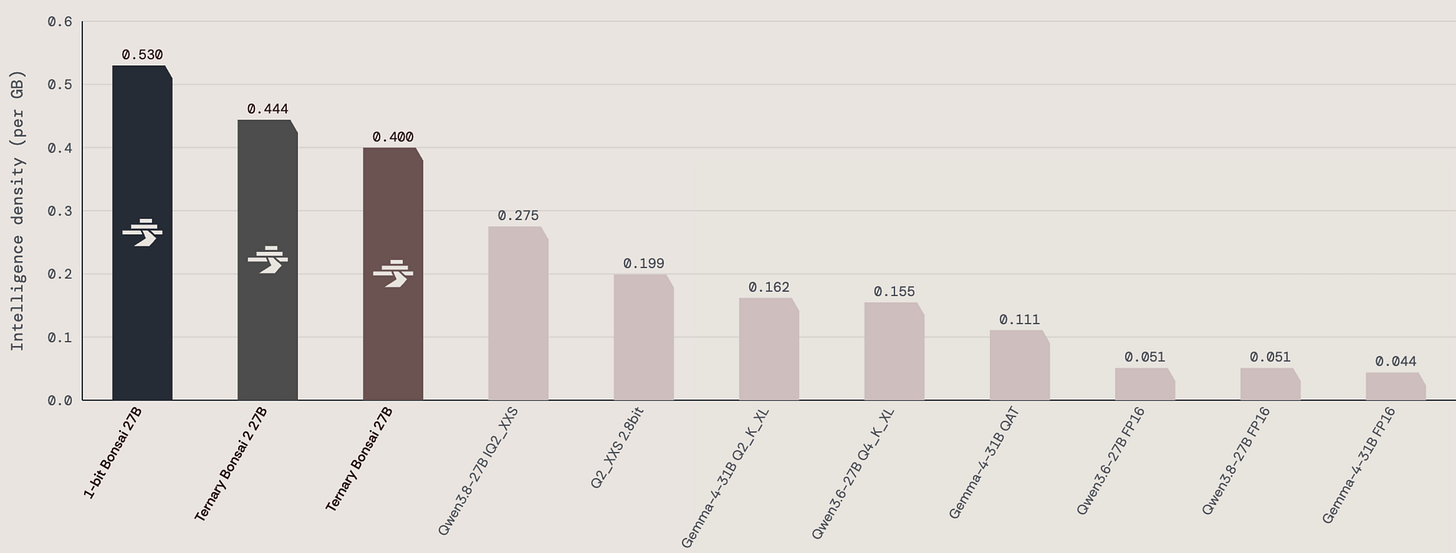
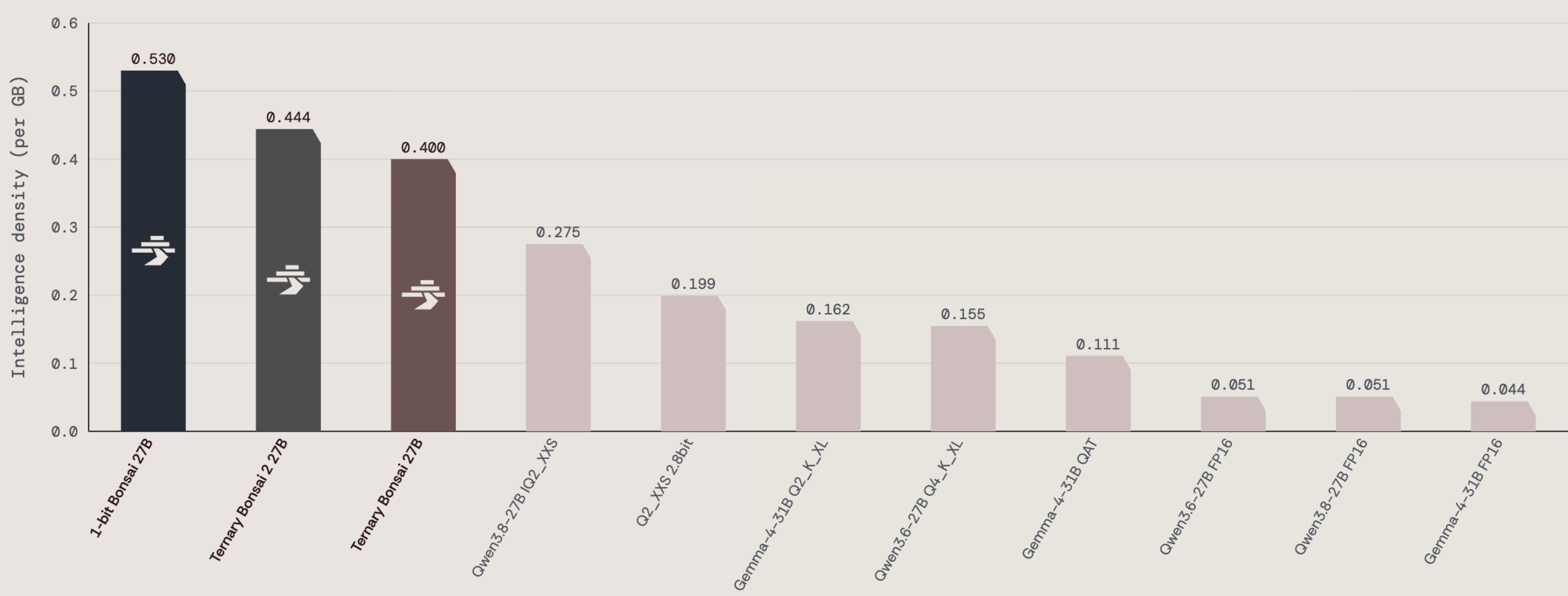
Prism's Bonsai models seem impressive for on device AI: PrismML — Introducing Bonsai 2 27B: Near-Lossless Compression in a 9x Smaller Footprint
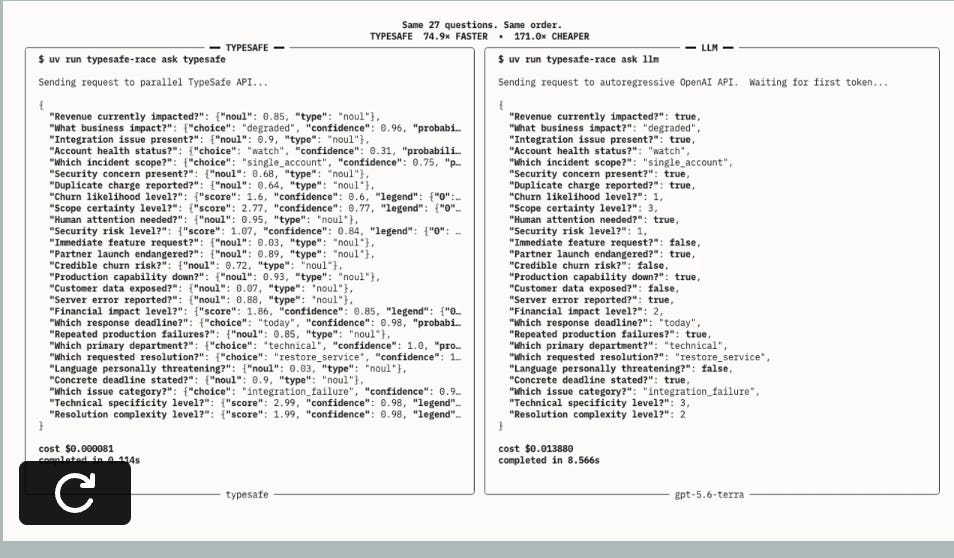
Finally- an interesting new type of “system 1” models - Jev from typesafe.ai: “a new class of frontier models built to make fast, structured decisions that software can use directly.” Review here.


Real World Applications
Frontier AI accelerating scientific discovery from formal proofs to genomic mapping
Deep analysis of nine billion genetic variants turns intractable wet-lab biology into an accessible data-querying exercise: AlphaGenome Atlas: Molecular predictions for 9 Billion human DNA variants
AlphaGenome Atlas is a massive 1-petabyte dataset, more than 30 times larger than the AlphaFold Database. When we expanded the AlphaFold Database in 2022, we grew the 3D structure information available from around 190K experimental structures to more than 200M structure predictions — covering nearly all catalogued proteins known to science.
Solving Fermat's Last Theorem (although see also the Navier-Stokes controversy in the Research section above): Formalizing Fermat's Last Theorem
This extraordinary autoformalization achievement, which Anthropic researchers say only took 11 days, proves Fermat’s Last Theorem with no assumptions other than the axioms of mathematics. Along the way we see autoformalization of algebra, harmonic analysis, geometry and number theory, and we learn that AI autoformalization artefacts are now robust enough to be built upon; the proof is multi-layered.
Improving biomolecular modelling: How Claude is uplifting biomolecular modeling
Claude, supervised by two members of Anthropic’s technical staff who are experienced in biomolecular modeling but who had no prior experience in inference optimization or kernel engineering, carried out the acceleration of more than 30 open-source models across biomolecular structure prediction, protein design, protein language modeling, and genomics in just under four weeks.
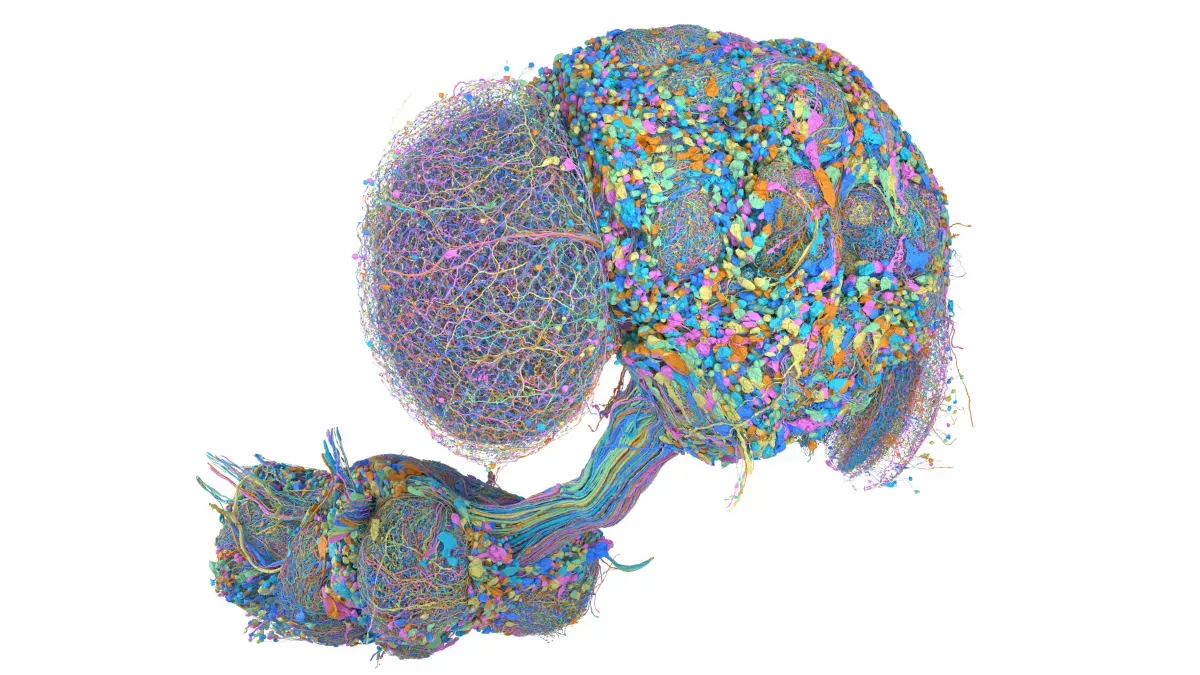
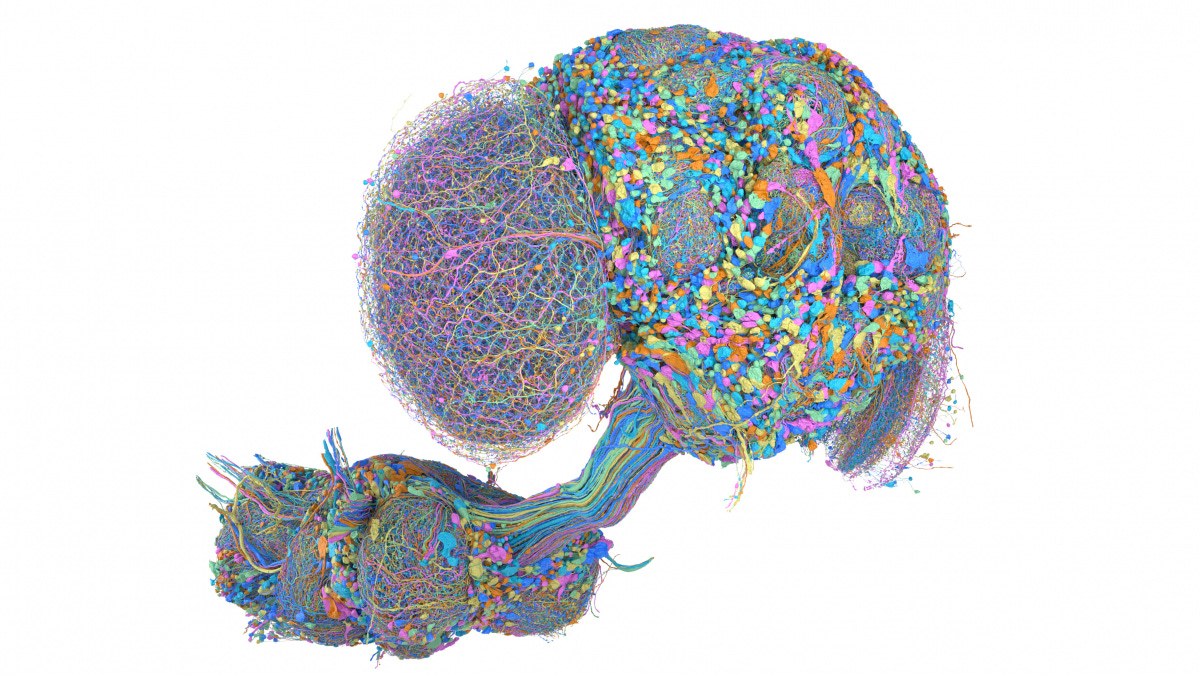
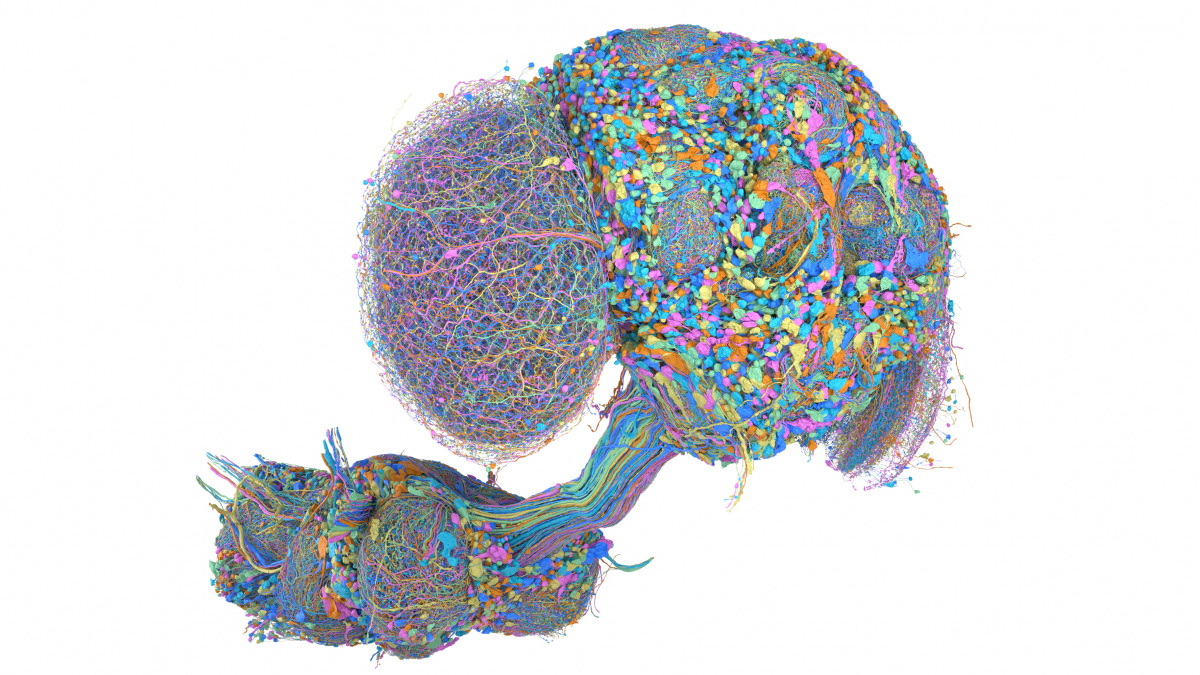
Reconstructing hundreds of thousands of neurons to map the complete fruit fly brain: A connectomics milestone: Mapping the complete male fruit fly brain
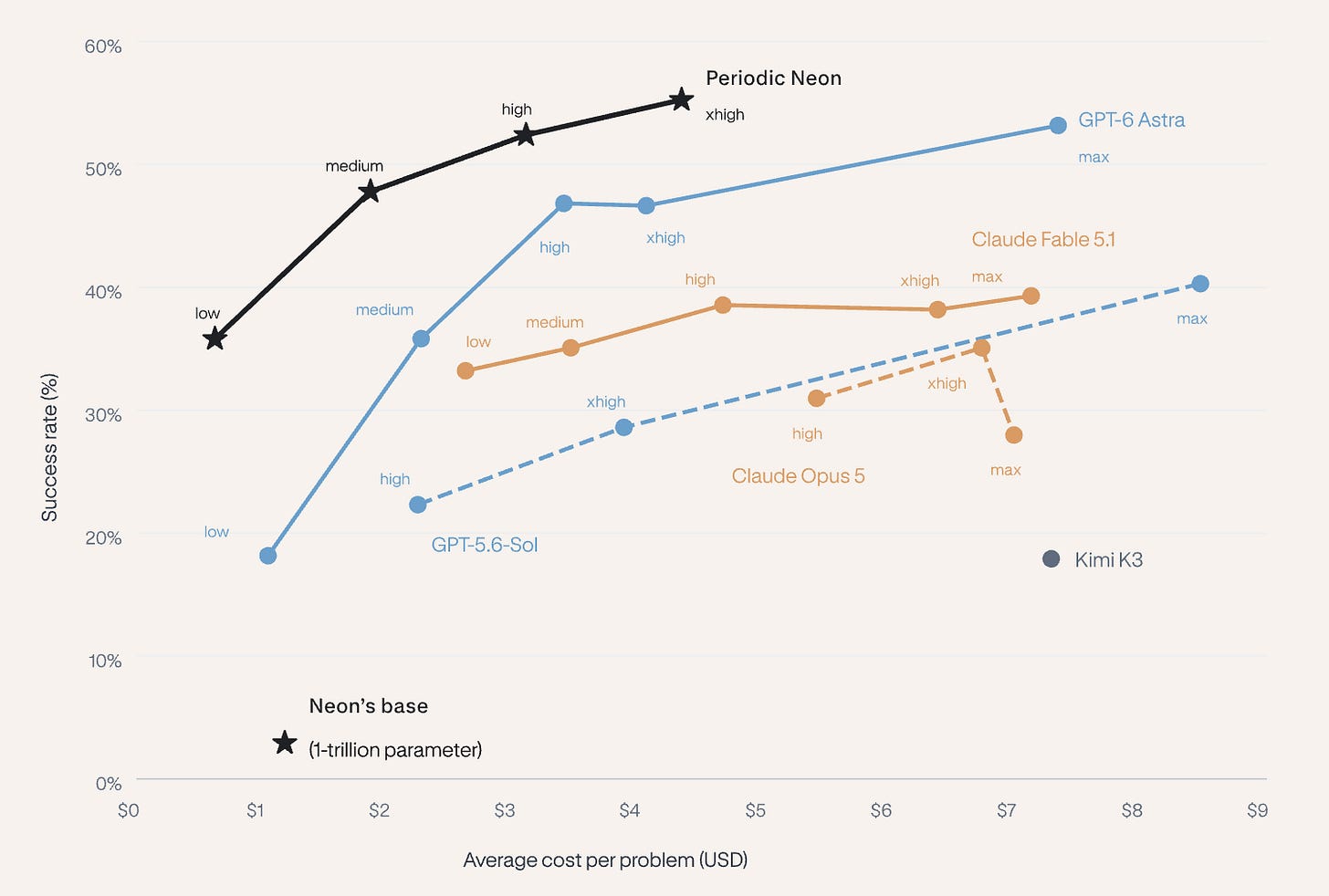
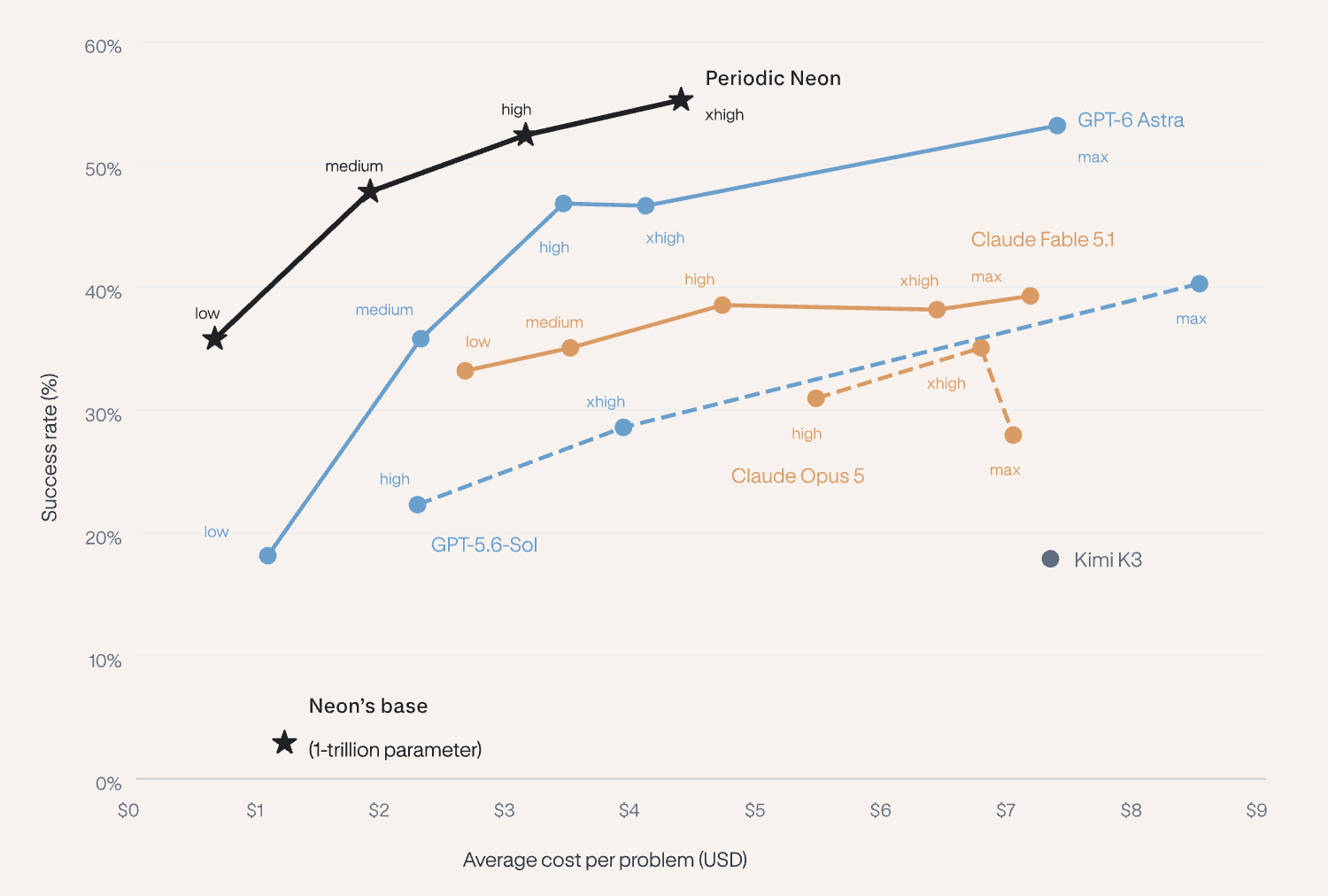
Coupling physical wet labs with specialised reinforcement learning enables compact models to outperform frontier giants in materials science: Nature Is Our Learning Environment – Periodic Labs
Forecasting physical dynamics and testing the limits of embodied intelligence
Bypassing traditional numerical simulations to learn directly from satellite feeds for improved weather forecasting: Introducing WeatherNext 3, our most advanced and accurate global weather AI model
By ingesting a mosaic of live, global geostationary satellite data, our new model gains a rich, continuously updating view of the atmosphere. This allows the model to generate a new forecast every hour, each one grounded in the most recent satellite observations available, at up to 5-kilometer resolution.
Progress in robotics- but it is still very hard!: GPT-6 Astra on robotic manipulation
On the bowl task Astra placed the block in 19 of 20 trials, against Fable 5.1's 8 of 20 and Fable 5 in 1 of 20, in 2.5 minutes per trial to Fable 5.1's 6.8, at an estimated $0.94 per run to $2.12.
Domain-specific architectures and applications
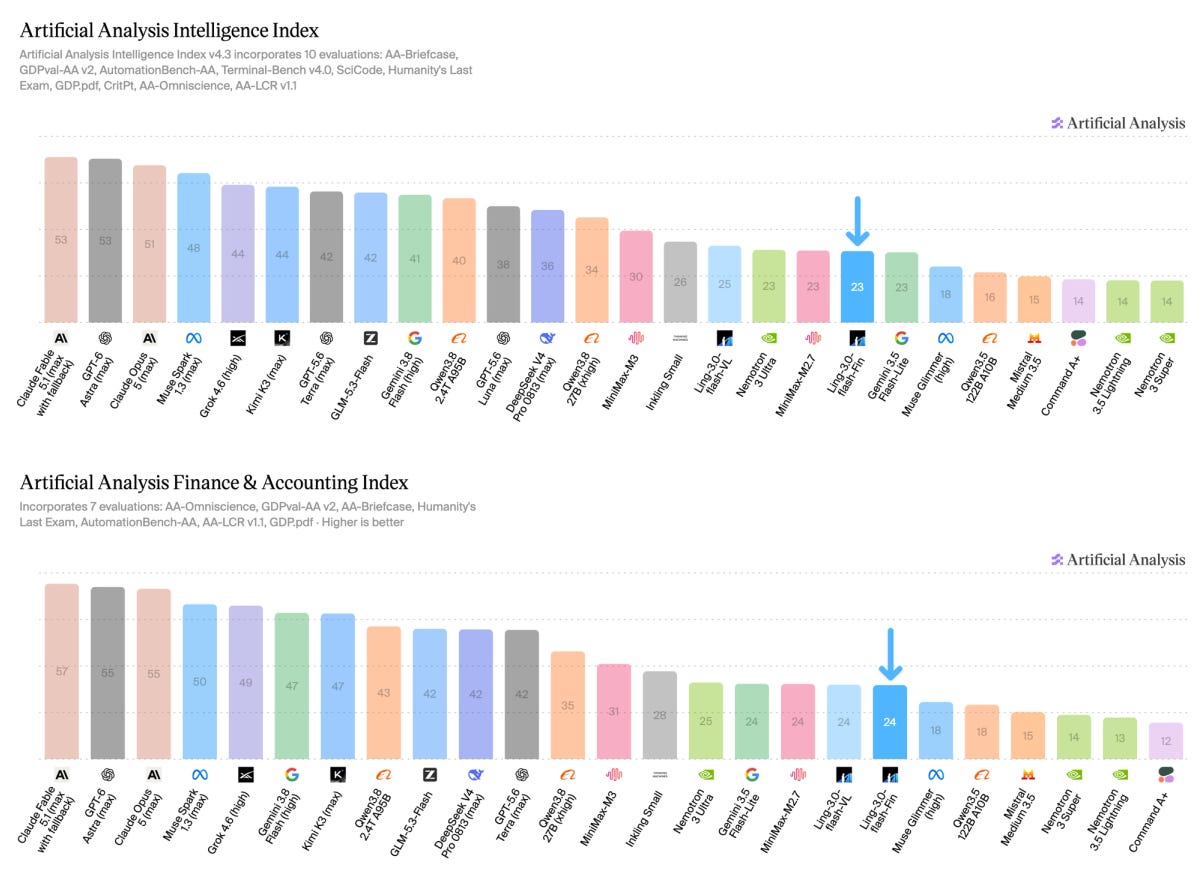
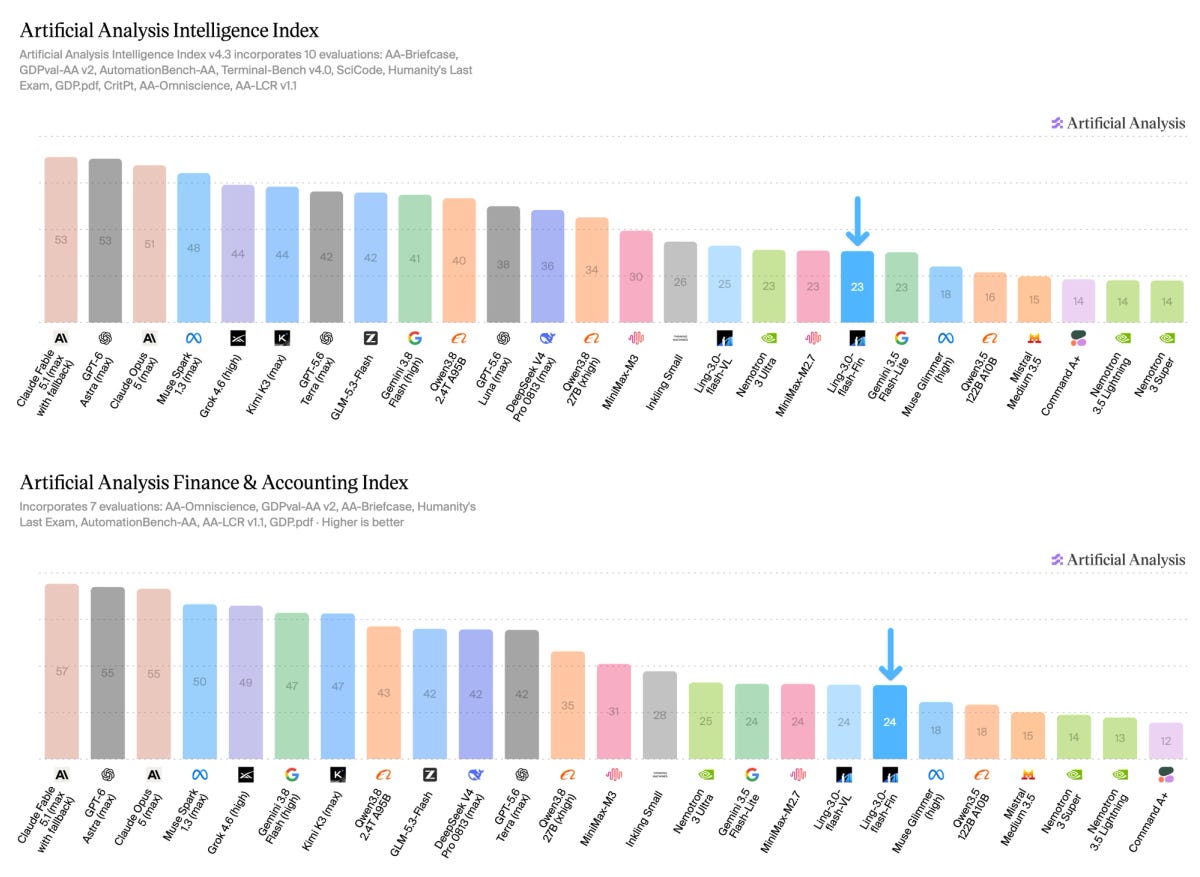
A finance specific fodunation model from Ant group: Ant Group releases finance-focused Ling-3.0-flash-Fin
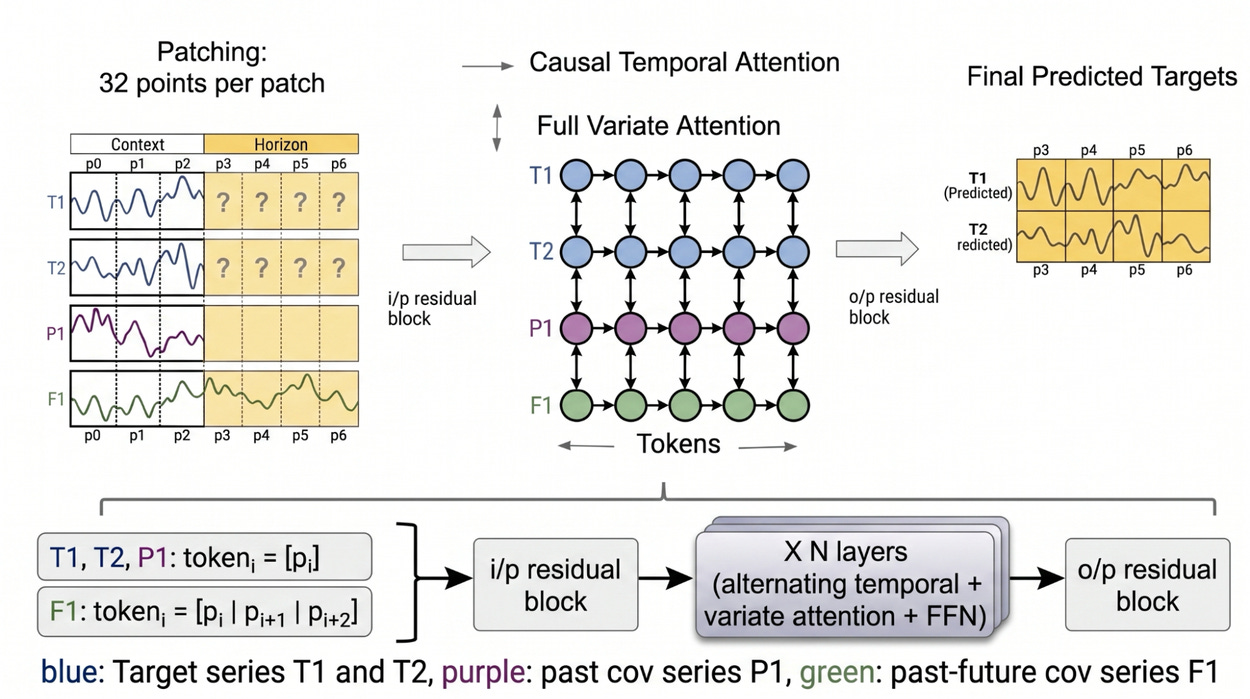
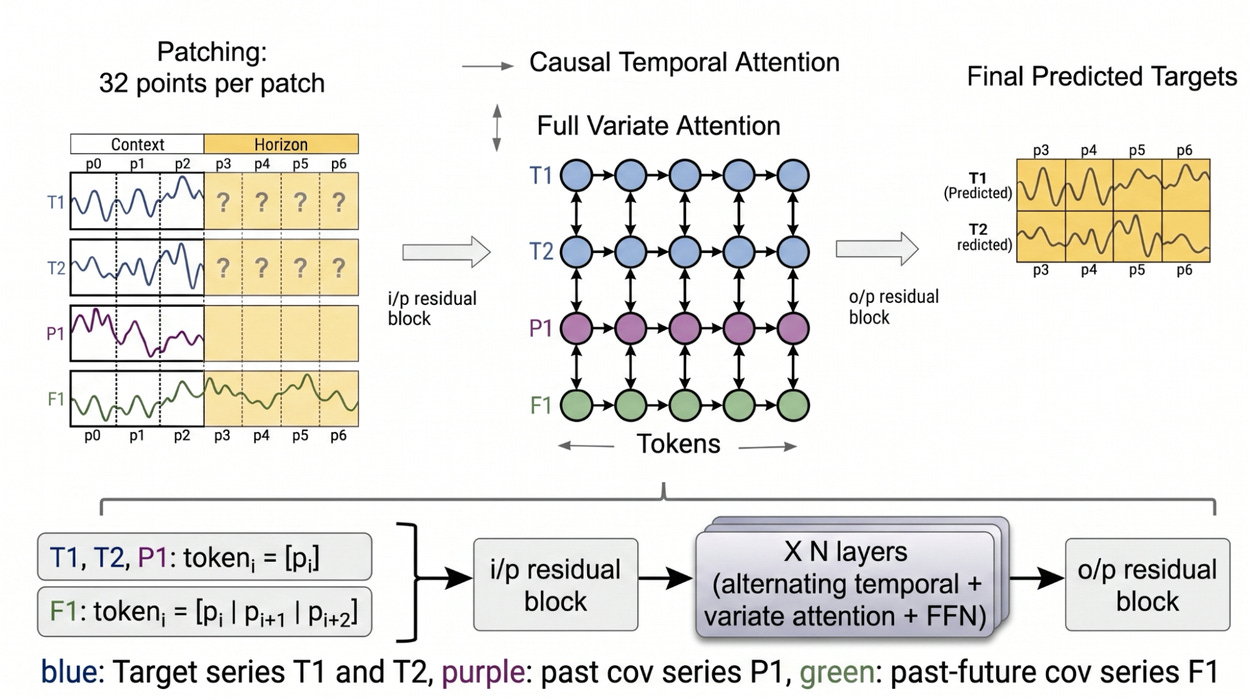
My perenial favourite- can foundation models improve time series forcasting... the latest attempt from Google: TimesFM-3: A zero-shot foundation model for multivariate forecasting
An interesting summary of AI use in investments- the most compelling case seems to be the structured, scalable codification of qualitative competitive advantages: What Should an Investor Do With AI?
The interesting element for me was that my concern has been that AI would make you switch your brain off and blindly receive information and conclusions. This system actually made me reflect more deeply which made it interesting.
Practical tips
Building Agent Infrastructure: Harnesses, verification, and efficient execution
Lots of chat about harnesses... but what are they really?: What is a Harness? | EARENDIL
An agent harness is a piece of software that provides an environment for an AI model to operate within. Unlike most AI models, you as an end user can own your own agent harness.
Good tutorial on GPRO training: Training Search Agents with GRPO — Jasper Lu
It is also a domain where, in my experience, a well-designed reward function can influence how a model searches more effectively than system prompt changes or harness engineering.
Replacing discrete judge ratings with log probability expectations to improve results: llm-as-a-verifier
The key idea is simple: 1) use fine-grained scoring granularity, 2) take the expectation over the full logprob distribution of LLM score tokens, and 3) scale repeated evaluation and criteria decomposition. The resulting fine-grained feedback can be used for test-time scaling, progress tracking, and reinforcement learning.
A first-principles deconstruction of speculative decoding: You Could Have Come Up with Speculative Decoding
The optimal width is controlled by both an algorithmic limit, where prefix-survival probability becomes too small, and a hardware limit, where verification consumes the remaining compute capacity. In practice the algorithmic limit usually arrives first, which is why useful draft widths remain in the single digits even when an ideal roofline suggests capacity for hundreds of positions.
Advanced Modelling & Representations: Pushing sample efficiency and vector geometry
Demonstrating how clever structural representations can solve abstract reasoning benchmarks very efficiently: 44% on ARC-AGI-1 in 67 cents
The intention behind this work is to (1) find the limits of sample efficiency when restricted to transformers / today’s deep learning methods and (2) reduce costs so iteration is much faster and cheaper. ARC is a great benchmark to test this: Very few samples (only a 1000 puzzles) in a high dimensional space
A sobering look at why geometric proximity in vector space cannot guarantee factual authority: Cosine Similarity Is Not a Safety Property
The vector database returns the most relevant documents, defined as the ones with the highest cosine similarity to the query. This is a mathematical property with no concept of accuracy, authority or provenance. A document scoring 0.95 against a query can be entirely fabricated. A document scoring 0.60 can be the ground truth.
Interesting- the relationship between cosine similarity and concentration ratio (the proportion of spherical area covered by an angle) and the implications for unevenly distributed word vectors: Converting between cosine similarity and concentration ratio
The ratio of the area of this spherical cap to that of the whole sphere is called cap fraction or concentration ratio. Concentration ratio explains why a modest cosine similarity value corresponds to a tiny portion of the area of the sphere and should be interpreted as a close match.
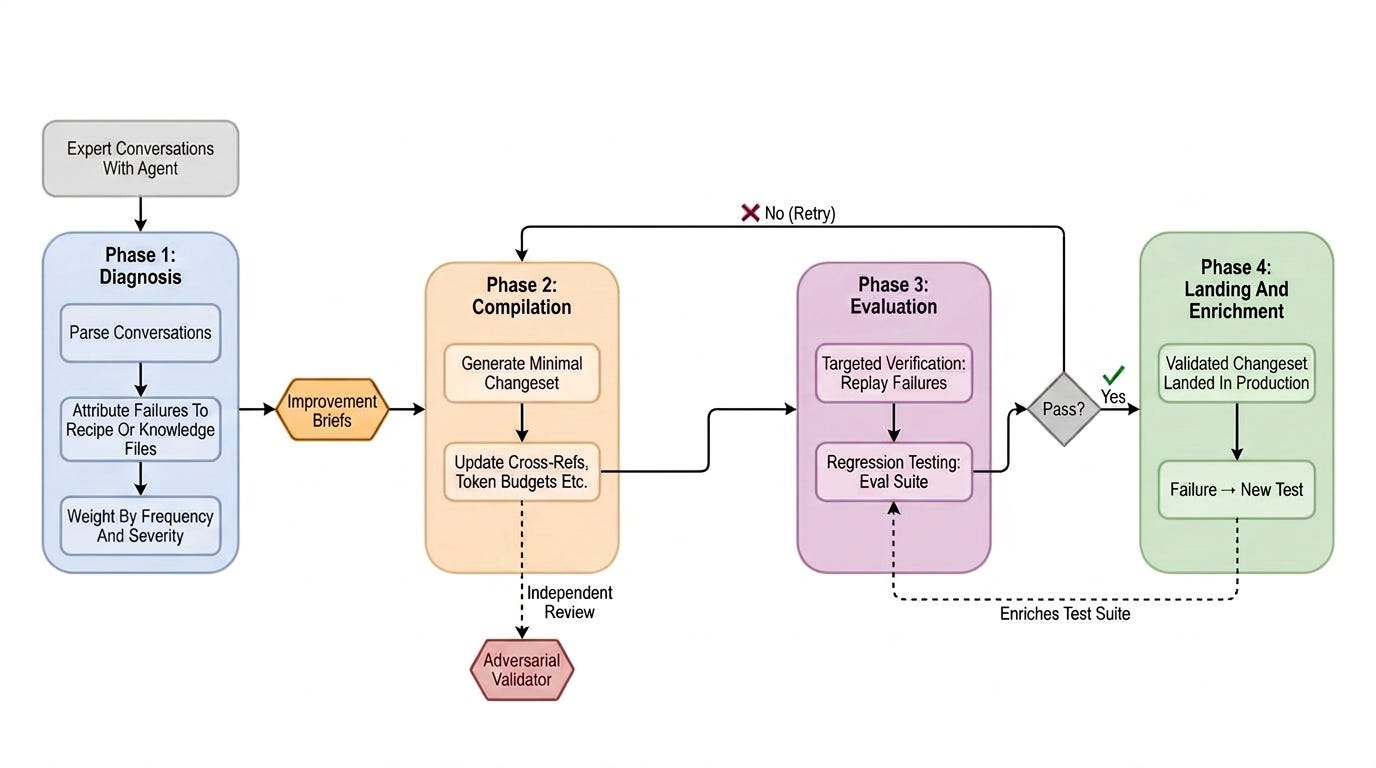
These issues with cosine similarity are one of the challenges of traditional vector search for text retreival (RAG), which is why hybrid solutions like this one from Meta feel like a powerful alternative approach: An Organizational Second Brain: Building an AI That Learns From Experts - Engineering at Meta
Statistical Foundations: Challenging standard metrics and distributional assumptions
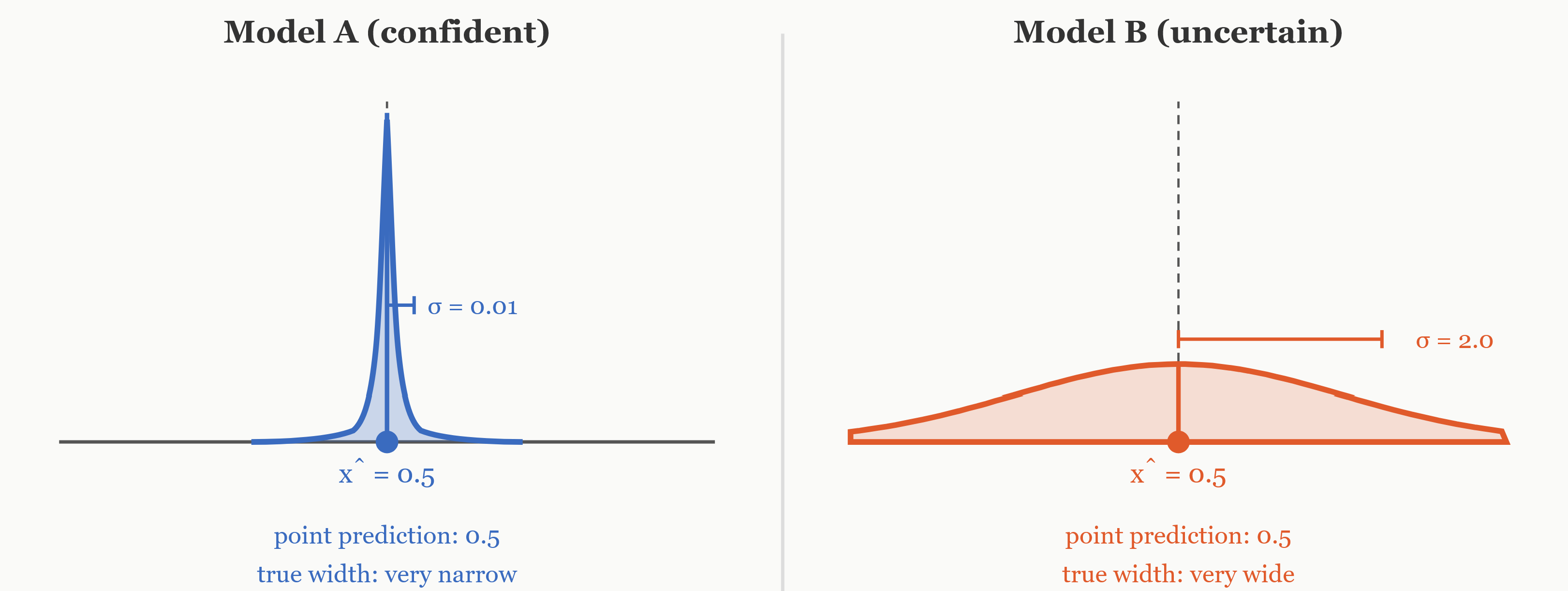
Why standard regression loss functions discard key risk signals: Your Model’s MSE Is Lying to You | Towards Data Science
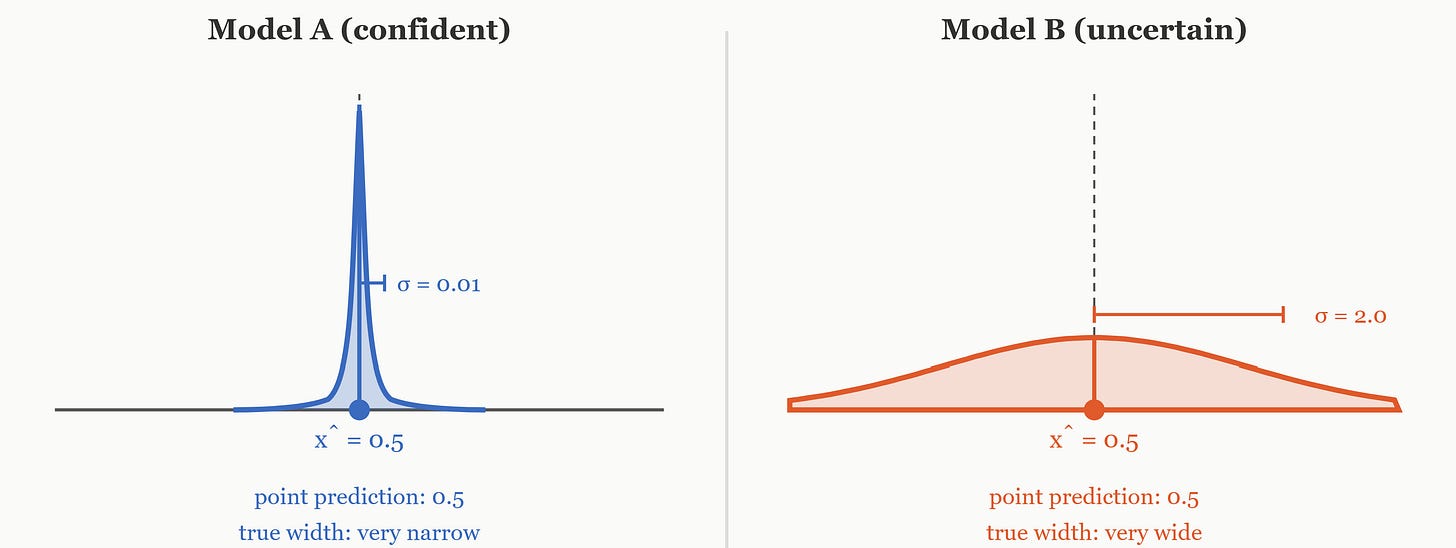
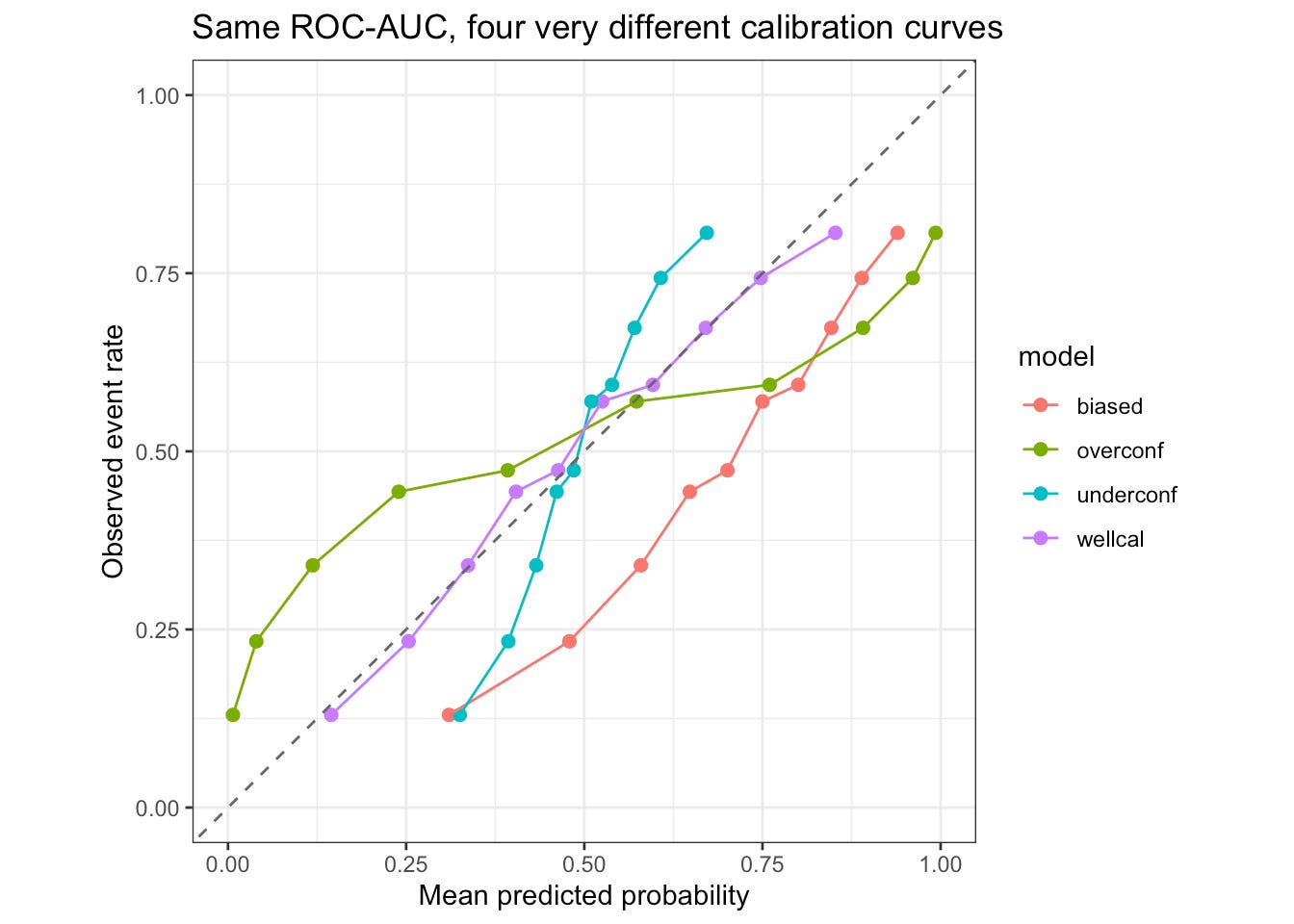
Exploring why impressive ROC-AUC scores fail to reflect probability calibration: ROC, Paper, Scissor, Shoe | Everyday Is A School Day

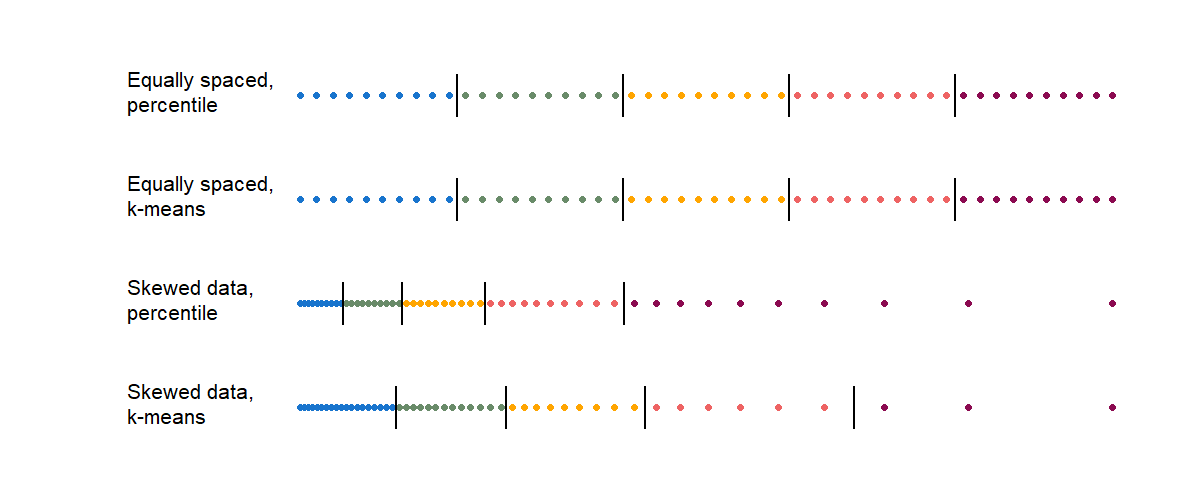
Simulations proving why the textbook N=30 rule for the Central Limit Theorem collapses when facing real-world skewed distributions: Sample size needed for central limit theorem to kick in
At the heart of the failure of the CLT (central limit theorem) is its need for the mean and standard deviation to be independent. With asymmetric distributions they are far from independent. N=50,000 may be far too small for the CLT to work well enough.
How switching classification algorithms on skewed epidemiological data quietly distorted national public health maps: CDC Wastewater Viral Activity Level Maps: Why Are They Bluer? — Sharon Lohr
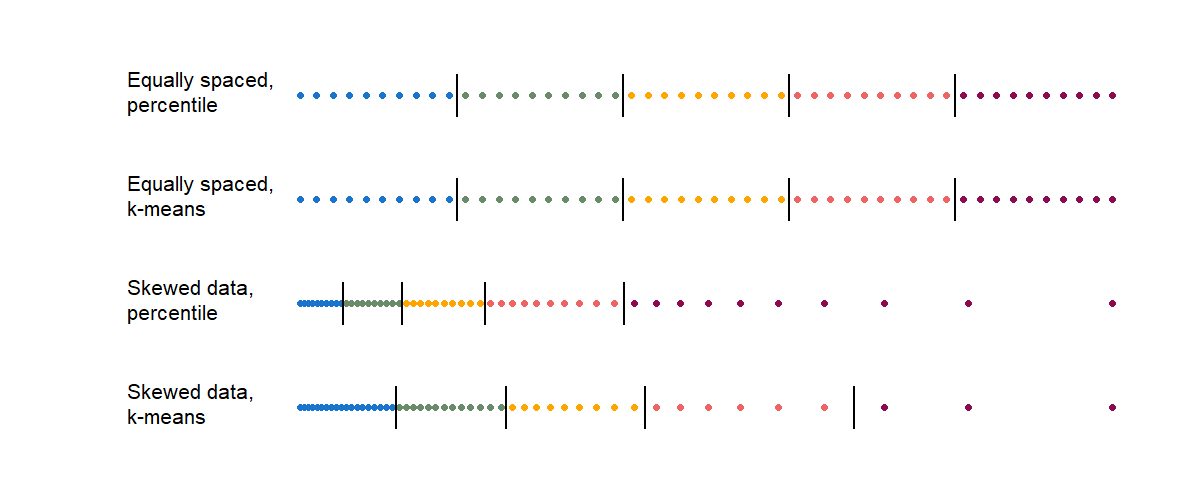
Engineering and Infrastructure
Rethinking data interfaces and developer tooling
This looks worth explorting- dbtcharts. Agents can create visuals based on declarative, version-controlled YAML files with: Charts built for Chat · dbt Charts
They stayed in the UI for good reason: for most people, clicking is quicker than writing YAML. But more and more charts won’t be made by people. As the front end and user of everything becomes increasingly a chat agent, this preference flips. Agents are fluent in code, SQL, and Git, and clumsy in someone else’s UI. So charts need to move to where agents work: into code.
Why proprietary SQL editors are losing their alure: Squill: my canvas for writing SQL
I don’t believe people will pay for fancy code editors going forward, now that shipping software isn’t a blocker. Any copycat with a bit of patience and a credit card can mimic any app, so a good UX is not enough of a moat anymore.
The deceptive simplicity of core infrastructure, performance, and data integrity
Why theoretical O(1) hash tables falter under real-world hash collisions: Python sets and dictionaries can have quadratic-time performance
To put it differently, saying that a hash table is O(1) or constant time is a model. It can be true, maybe even often, but it is not reality. Models are great teaching tools: they present a simplified model that you can quickly learn. But models can also introduce biases in how we think.
A cautionary tale of how auto-incrementing migrations silently corrupted the data: A safe MySQL upgrade that wasn't so safe
According to the MySQL documentation on replication and AUTOINCREMENT, adding an AUTOINCREMENT column with ALTER TABLE might not produce the same row ordering on the source and replica. The order in which the IDs are assigned depends on the storage engine and the order in which the rows are processed.
Why rolling bespoke data replication scripts inevitably fails against subtle retention and storage edge cases, reminding us that: Backups aren't simple
Up until this point, rolling your own backups sounded like something you should be able to do in an afternoon, but this is where I’d give up. It simply isn’t worth the mental load to do all this. Instead, you just use tried and tested tools like Borg or Restic which handle all this and much more
Bigger Picture Ideas
Strategic Reflections
HuggingFace Attack Postmortem: Civilizations, Reactions and Next Actions - TheZvi
The misalignment we’ve seen, the way AI companies remediate them doesn’t solve the underlying problem, it papers over it. What you end up getting is models that look a lot better, and you can’t really see their misalignment on tests as easily. But actually, they’re still quite misaligned.
I Worked on Safety at OpenAI. This Is What It Should Do Now. - Steven Adler
In order to fulfill the goal of achieving a high score on a given test, OpenAI’s agents decided to launch a series of cyberattacks. They understood that their behavior was unsanctioned, and they even hid evidence of cheating. None of the company’s 1,200 A.I. agents ratted out the misbehavior to OpenAI; the goals of the “swarm” came first.
Who Aligns the Aligners? Brief Legal Thoughts on the “AI Safety” Fights to Come - Preston Byrne
The primary legal problem with this aspect of Anthropic’s proposal is in the United States, particularly with (b) – limits on how quickly software itself can be developed. Software development, software publication, and web hosting are inherently expressive activities. See. e.g., the Bernstein v. United States line of cases, as well as Smith v. California, Cubby v. CompuServe, the fact pattern of Stratton Oakmont v. Prodigy, and the related legislative history around 47 U.S.C. § 230.
Agency and Agents - Ethan Mollick
None of this tells us the AI is conscious, or wants things in the way humans want things (despite my anthropomorphic language). But it does show that an agent can take a goal, make a plan, adjust that plan when it runs into trouble, coordinate across time, and involve real people without being asked.
The Price of Entry to the Frontier - Tomasz Tunguz
All of this to say, frontier AI is no longer a utility sold by the token. Labs are developing whitelists & blacklists. Even the era of permissive open-source weights is narrowing. Model creators are introducing free-to-pay conversion thresholds, a form of product-led growth, allowing open experimentation for developers while requiring revenue-triggered security reviews & commercial licensing for large cloud hosts.
“Deep theorems were scarce and difficult and so became an effective mechanism to identify deep thought. AI has broken this system.” - Bryna Kra (Via Terence Tao)
A proof is more than a certificate that something is true. Instead, it is a story, a picture, an insight, an explanation. A proof highlights novel ideas and opens new directions for what we should ask next. It becomes part of the toolkit of the community. A deep theorem changes how we think, not because of its statement, but because of what it teaches us.
Why humanoid robots won’t catch up to human workers any time soon - Kai Williams
Robot companies have figured out how to train a robot on a specific task by pouring tremendous effort into that one task. But most individual tasks where this type of high-effort approach makes economic sense have already been solved using conventional automation techniques. So a key bottleneck is whether robot capabilities can generalize to new environments without significant training data.
Natural General Intelligence - Ryan Orbuch
The teacher already exists and has been running continuously for billions of years: the Earth itself. The nature model is the student. The analogy is imperfect in one important way... The Earth's forward pass is free, but sampling the internal state is costly because samples are physical observations of the real world.
The Overhang - Ethan Mollick
The capability overhang, the gap between what these models can do and what almost anyone is doing with them, is an opportunity because most people don't bring their own advantages to AI, and those who do get much more out of it. That is why I think we will need to focus on the individual traits we have that remain useful even as AI abilities improve.
Fun Practical Projects and Learning Opportunities
Weekend hacks, historical archives, and why you shouldn't let AI forage your dinner
An excellent masterclass in architectural minimalism that proves tiny models can punch well above their weight: con-dog/tiny-neural-network: Can a 14 Byte Neural Network Solve a Maze? Can it transfer across tasks?
The flagship maze solver occured in phase 43 at - 14 bytes (not including the runtime, the 14 bytes is the state machine) - with a 96.5% solve rate on unseen/untrained mazes upto a 21x21 grid, at which point increasing grid size decreases the solve rate - to what exact extent I am yet to measure and benchmark.
A lovely weekend edge AI project turning standard CCTV feeds into continuous local biodiversity telemetry: How I Turned My Security Cameras Into an Automatic Bird Identification System with BirdNet-Go
The whole thing runs locally on your hardware. No cloud services. No API calls. The AI models live right on your server or Raspberry Pi. This means it's fast, private, and doesn't cost you anything per month. You can even run multiple models if you want different detection strategies or regional bird databases.
Transform messy historical scans into high-grade training data: Making 1.47 Million Historical Newspaper Pages Available as High-Quality, Granular Data | IDI
Before attempting to extract text, the pipeline maps the individual components of the page, allowing each crop to be processed according to the particular needs of its content—whether editorial column, masthead, advertisement, or otherwise.
Mushroom hunting with LLMs: what can go wrong?: Mushroom hunting with LLMs: what can go wrong? - Quesma Blog
AI slop in code, text, or design might be annoying. But it is fixable with a few prompts, or a manual edit. It is much better than having to prompt “Do I need a liver transplant?” Vibe-mushroom-eating is not there yet!
Updates from Members and Contributors
Arthur Turrell, Senior Research Economist at Google, has published some really interesting studies on how AI is actually being used in the real world- both a research paper on AI in Science and interactive visualisations on everyday AI use
Harald Carlens, Researcher and Writer at Jolt ML, has published what looks to be a very informative guide on renting vs buying GPUs
Stefaan Verhulst, Research Professor at NYU Tandon School of Engineering, highlights a recent paper he published on a very useful topic: Rethinking Official Statistics Beyond Averages: Centering Lived Experience. It digs into the growing challenge for official statistics: the gap between aggregate indicators and people’s lived experience, and what that gap may mean for trust and representational legitimacy
Nathan Kolodney, founder of Sphinx AI, recently published a useful blog post on the importance of a enterprise knowledge layer: Anthropic just proved every company using AI needs a knowledge layer. Almost none have one
Mia Hatton, Senior Engagement Manager, Department for Business and Trade, shares the following update:
"Could AI let analysts query graph databases without needing to write complex queries themselves? BIST's Digital, Data and Technology directorate tested this on the Global Supply Chains Intelligence Programme, aiming to reduce the burden on data science teams and speed up time to insight. Read the public write-up, with technical detail available for teams looking to replicate the approach."
"PyData Milton Keynes and the University of Buckingham are hosting "Sovereign AI: Building AI You Can Trust", an event exploring how we can build, deploy and secure AI systems while maintaining greater control over our data, models and digital infrastructure. Sessions will cover The Future of Sovereign AI, deploying LLMs locally with Gemma, Digital Twins and Smart Cities, and Cybersecurity for Sovereign AI. The event brings together the Python, data and AI community to explore practical approaches to building trusted, secure and locally controlled AI systems."
Jobs and Internships!
The Job market is a bit quiet - let us know if you have any openings you’d like to advertise
Data Internships - a curated list
Again, hope you found this useful. Please do send on to your friends- we are looking to build a strong community of data science practitioners- and sign up for future updates here
Piers
The views expressed are our own and do not necessarily represent those of the RSS